Whatsapp
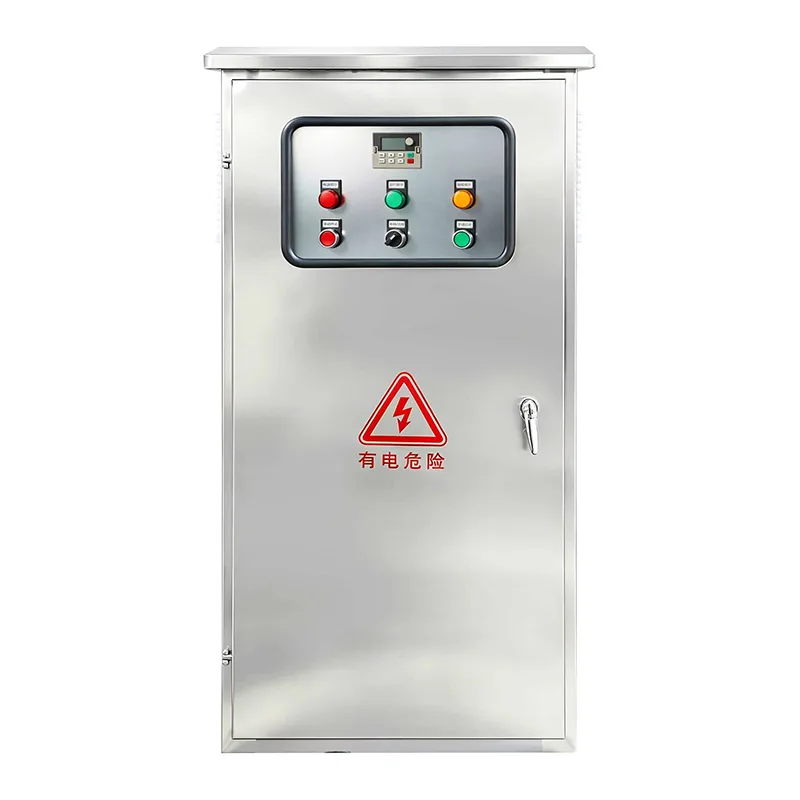
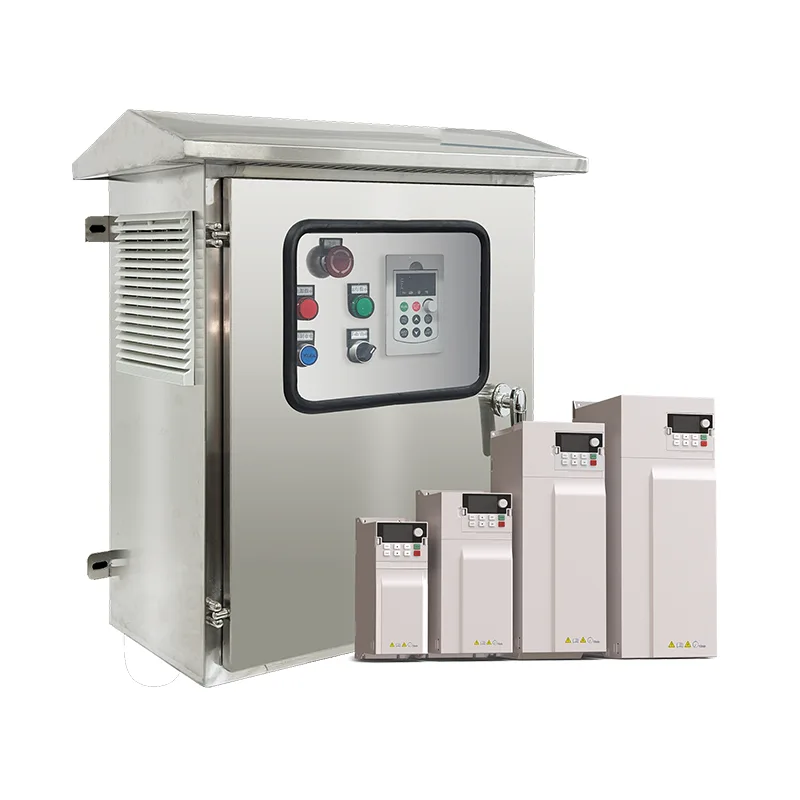
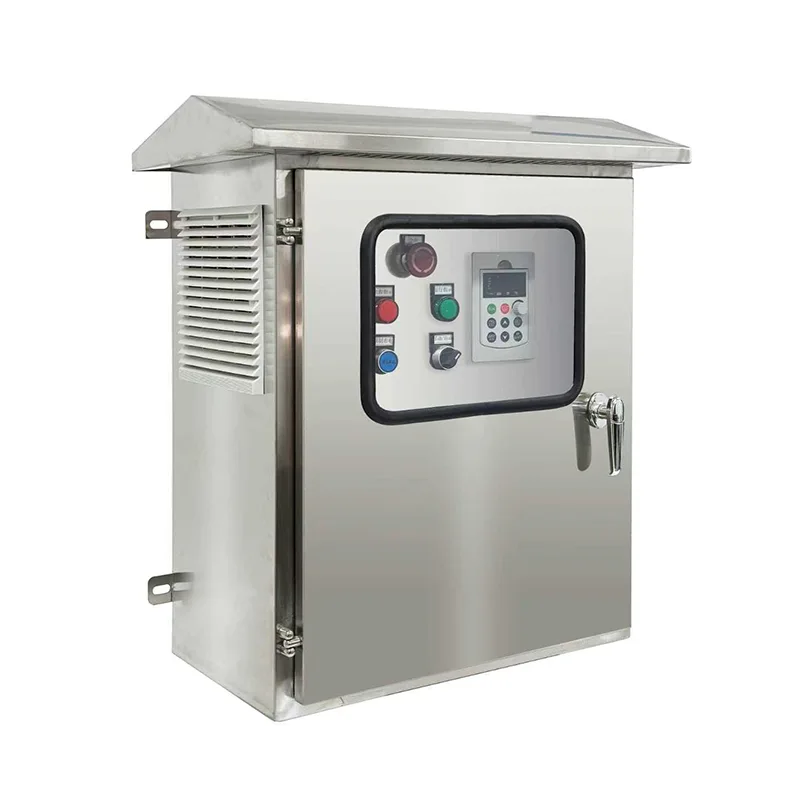
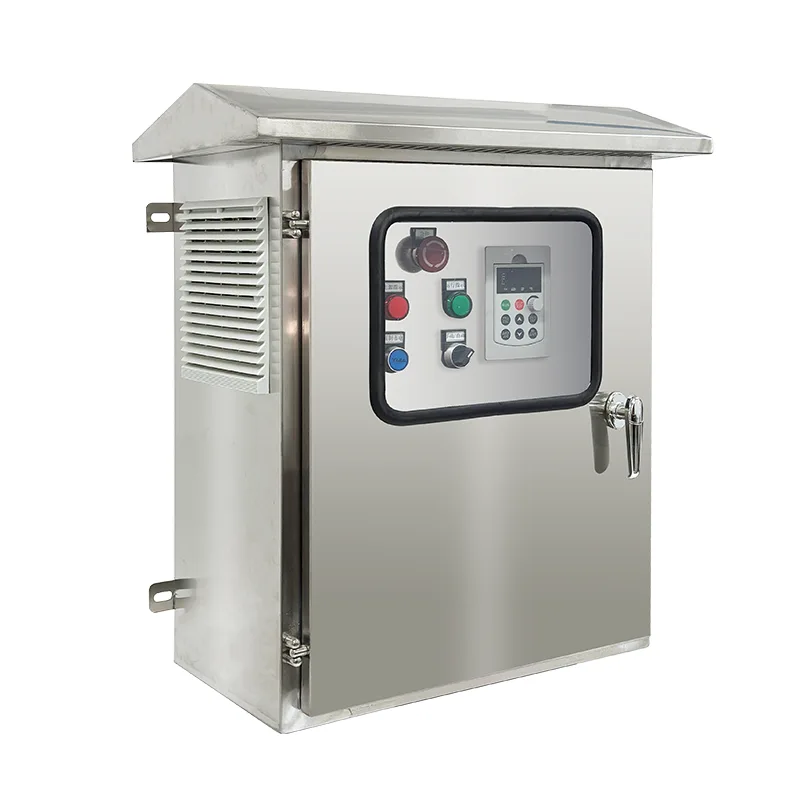
Available in configurations from 2-string to 24-string inputs, this PV Combiner Box Distribution Cabinet offered by leading China manufacturer Csivei, aggregates parallel PV strings onto a common DC bus, with each input channel protected by a dedicated DC fuse holder and fuse link rated for the string's short-circuit current. A main DC disconnect switch or moulded-case circuit breaker provides single-point isolation of the entire array, while surge protective devices (Type 1+2 or Type 2) on both the positive and negative busbars guard against lightning-induced overvoltage transients. DC busbar ratings span from 100A to 800A and above, with system voltages up to 1000VDC or 1500VDC depending on specification. The cabinet enclosure, constructed from galvanised steel or stainless steel with weatherproof powder coating, is available in IP65 or IP66 ratings for direct outdoor exposure. An optional smart monitoring module measures per-string current, bus voltage, and breaker status, transmitting data via RS485 Modbus RTU to SCADA systems or the inverter's communication platform — enabling rapid fault localisation across large-scale PV fields. Full compliance with IEC 61439-1, IEC 61643-11, and relevant regional standards is maintained.
Where multiple PV strings converge before the inverter, the PV Combiner Box / Distribution Cabinet provides organised, protected DC aggregation — simplifying cabling, enhancing safety, and enabling efficient fault management.
In agricultural and municipal solar pumping installations, PV arrays often span wide fields with dozens of parallel strings. A centrally located combiner cabinet collects all string inputs close to the array, outputting a single managed DC feed to the pumping inverter. This minimises long, costly DC cable runs and reduces voltage drop losses. The integrated DC disconnect provides safe isolation during pump or inverter maintenance, while per-string fusing ensures a single string fault does not cascade.
Large ground-mount PV installations require structured, protected DC collection across multiple inverter zones. Combiner cabinets positioned at strategic points within the array field consolidate string groups, feeding higher-voltage, lower-current DC to central inverters or transformer stations. Smart monitoring versions enable operations teams to detect underperforming strings remotely, dramatically reducing troubleshooting time across hundreds of hectares.
Factory, warehouse, and office building rooftops with multiple PV string orientations benefit from combiner cabinets located adjacent to the array. Strings are grouped by roof zone, orientation, or shading profile, then combined into a single DC output routed through cable trays to the inverter room. The PV Combiner Box Distribution Cabinet's weatherproof enclosure withstands rooftop exposure, and the main isolator provides a convenient shutdown point for fire services or maintenance crews.
Remote off-grid sites — such as telecom towers, mining camps, and island communities — often combine PV with diesel generators. Combiner cabinets consolidate solar array strings before feeding into the hybrid charge controller or inverter. Per-string protection is critical in these applications where site access is infrequent and fault isolation must be automatic and safe.
In DC-coupled storage installations, combiner cabinets aggregate PV strings before they connect to a shared DC bus serving both inverter and battery charger. The cabinet's fused inputs and main breaker provide the required overcurrent protection and isolation for safe battery system integration.
The PV Combiner Box Distribution Cabinet is engineered as a complete, factory-tested DC aggregation point — merging string protection, surge suppression, and optional intelligence into a single enclosure.
Each PV string input channel is terminated on a dedicated fuse holder rated for DC operation up to 1000VDC or 1500VDC, depending on system specification. Fuse links are sized per string short-circuit current (typically 1.56 × Isc per IEC requirements) and housed in touch-safe finger-proof carriers. All string inputs are individually isolated by dedicated fuse disconnectors, allowing a single string to be safely disconnected for testing or maintenance while the remainder of the array continues operation. Combined DC busbar ampacity is calculated with appropriate derating for continuous full-load operation in elevated ambient temperatures.
Type 1+2 or Type 2 surge protective devices are installed between positive-to-earth and negative-to-earth on the main DC bus, tested to IEC 61643-11 and EN 61643-31. In high-lightning-risk regions, Type 1+2 SPDs with 12.5kA or higher impulse current ratings are specified, providing both equipotential bonding and transient overvoltage protection. SPD status indication — typically a green/red mechanical flag — provides visual confirmation of operational readiness, with optional remote signalling contacts for supervisory monitoring.
A main DC disconnect switch or moulded-case circuit breaker rated for the full busbar current and system voltage serves as the single-point array isolation device. This switch is externally operable via a door-mounted handle, allowing safe lock-out/tag-out without opening the cabinet. In larger cabinets, an arc chute and magnetic blowout design ensures safe interruption of DC fault currents, which are more challenging to extinguish than AC arcs.
The enclosure is fabricated from 1.5mm to 2.0mm galvanised steel sheet or grade 304/316 stainless steel for coastal and corrosive environments. A weatherproof, UV-resistant powder coat finish is applied after fabrication, with all seams continuously welded or gasketed. IP65 또는 IP66의 보호 등급이 표준이며, IP65는 대부분의 실외 응용 분야에 적합하고 IP66은 고압 세척 또는 극도의 먼지 환경에 지정됩니다. The PV Combiner Box Distribution Cabinet door is fitted with a full-perimeter compression gasket and stainless steel hinges. Passive ventilation is provided by filtered breather drains that equalise pressure while blocking moisture and insect ingress. Internal temperature rise is managed through generous busbar cross-sectional area and conservative current density design, avoiding hot spots that can degrade fuse performance.
String input cables enter through IP-rated cable glands or gland plates on the cabinet bottom or sides, with gland sizing specified to match the array cable diameter. Internal terminals are screw-clamp or bolt type, suitable for copper or aluminium conductors. Busbars are tin-plated copper, dimensioned for uniform current distribution across all input channels. Cable management channels and tie-down points inside the cabinet ensure a tidy, serviceable layout.
An optional monitoring board measures individual string current via Hall-effect sensors, bus voltage, breaker status, and SPD health. Data is transmitted via RS485 Modbus RTU to a local data logger, the inverter, or a remote SCADA platform. String current imbalance alarms allow operations teams to pinpoint underperforming or faulted strings from the control room, eliminating the need for manual clamp-meter surveys across large arrays. The module is self-powered from the DC bus, requiring no separate auxiliary supply.
The cabinet is designed and tested to IEC 61439-1 (low-voltage switchgear and controlgear assemblies) and IEC 61643-11 (surge protective devices). Regional certifications including CE and TUV are available depending on target market.
Q1: How many PV strings can be combined in one PV Combiner Box Distribution Cabinet?
Standard configurations range from 2 to 24 string inputs. Custom input counts are available on request. The number of inputs, combined with the string fuse rating, determines the total busbar current — our engineers will help you select the correct cabinet size based on your array design.
Q2: What is the difference between a combiner box and a distribution cabinet?
The terms are often used interchangeably, but our product serves both functions in one enclosure. As a combiner, it aggregates multiple string inputs onto a single DC output. 분배 캐비닛으로서 DC 전력을 여러 부하로 분할하거나 여러 인버터 입력을 위한 DC 스위치기어와 같은 추가 기능을 포함할 수도 있습니다. The cabinet can be configured to match your specific system topology.
Q3: 1000VDC 또는 1500VDC 중 어떤 정격 전압이 필요합니까?
This depends on your PV array's maximum system voltage. Most residential and commercial systems up to approximately 100kW use 1000VDC. Utility-scale systems increasingly adopt 1500VDC to reduce cable losses and combiner quantities. Our cabinets are available in both voltage classes, with components appropriately rated. Never specify a 1000V cabinet for a 1500V array — confirm your inverter's maximum input voltage first.
Q4: Can the cabinet be installed outdoors with direct exposure to rain and sun?
예. The standard IP65 enclosure is designed for permanent outdoor installation, with sealed door gaskets, UV-resistant coating, and filtered drains. For extremely exposed locations, IP66 is available. A sunshade canopy accessory is recommended in tropical and desert climates to reduce direct solar heating and extend component life.
Q5: Do I need surge protection in every combiner cabinet?
우리는 그것을 강력히 추천합니다. PV arrays cover large surface areas and are inherently susceptible to induced overvoltages from nearby lightning strikes. A single surge event can damage multiple strings and the inverter's DC input stage. Our cabinets include Type 1+2 or Type 2 SPDs as standard, and we recommend installing SPDs at both the combiner level and the inverter DC input for layered protection.
Q6: What is the smart monitoring option and do I need it?
The monitoring module measures per-string current and communicates string-level performance data to your SCADA or monitoring platform. For small systems with easy array access, manual checks may suffice. For utility-scale sites or installations where rapid fault location is critical, smart monitoring reduces troubleshooting time from hours to minutes by flagging the exact underperforming string.
Q7: What maintenance is required on the combiner cabinet?
A single combiner cabinet was specified for each site, positioned at the end of the array closest to the inverter. All string cables were run the short distance from the array ends into the cabinet, where they terminated on individual fused inputs. The cabinet's main DC output — a single, protected cable pair — ran from the combiner to the inverter, dramatically reducing total copper usage and simplifying trenching.
The cabinet's per-string fusing was essential for the large parallel arrays. In the event of a string fault — such as a shorted bypass diode or a damaged module — the affected fuse would clear, isolating that string while the remaining array continued operating unaffected. Without per-string fusing, a single fault could potentially back-feed into the faulted string from all other parallel strings, creating a fire risk.
Lightning protection was a decisive feature. Type 1+2 surge protective devices installed in every cabinet provided the first line of defence against induced surges, protecting both the array wiring and the expensive inverter power stage downstream. 메인 DC 차단 스위치를 사용하면 현지 기술자가 실수로 재전원이 공급되는 것을 방지하기 위한 잠금 기능을 통해 인버터 유지 관리 또는 펌프 교체 중에 전체 어레이를 안전하게 격리할 수 있었습니다.
For the ten largest sites, the optional smart monitoring module was included, measuring per-string current and transmitting data back to the central SCADA system via the inverter's GPRS link.
주소
중국 절강성 원저우시 웨칭시 류시진 류장로 3788호
견적이나 협력에 관한 문의 사항이 있으시면 언제든지 sanchia@csivei.com으로 이메일을 보내시거나 다음 문의 양식을 이용해 주시기 바랍니다. 당사 영업 담당자가 24시간 이내에 연락을 드릴 것입니다. 저희 제품에 관심을 가져주셔서 감사합니다.
왓츠앱:8615705777705